

April 14, 2025
Hello to a new week, Team Alpaca!
We have had a truly exciting start to the quarter — so much excitement for Alpaca Pulse, several new customers already, and holy moly, the applicants for Camp Alpaca are just incredible. I couldn’t be more excited for all that’s ahead of us this quarter.
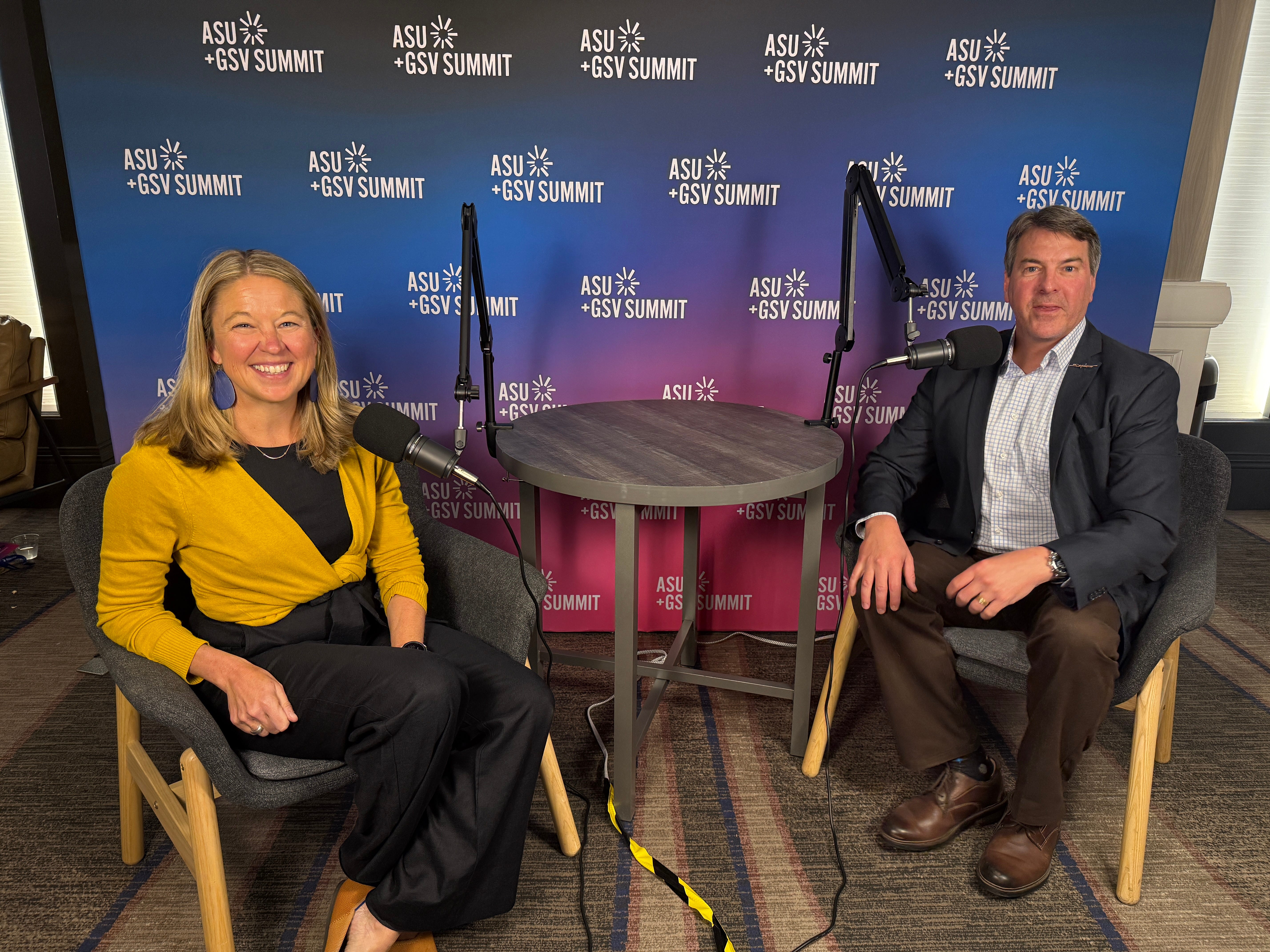
Last week I had the joy of attending the ASU+GSV Summit in San Diego — a week filled with learning about the innovations in AI + edtech, a recording of a podcast interview 👀 and some really focused feedback sessions with our core customers.
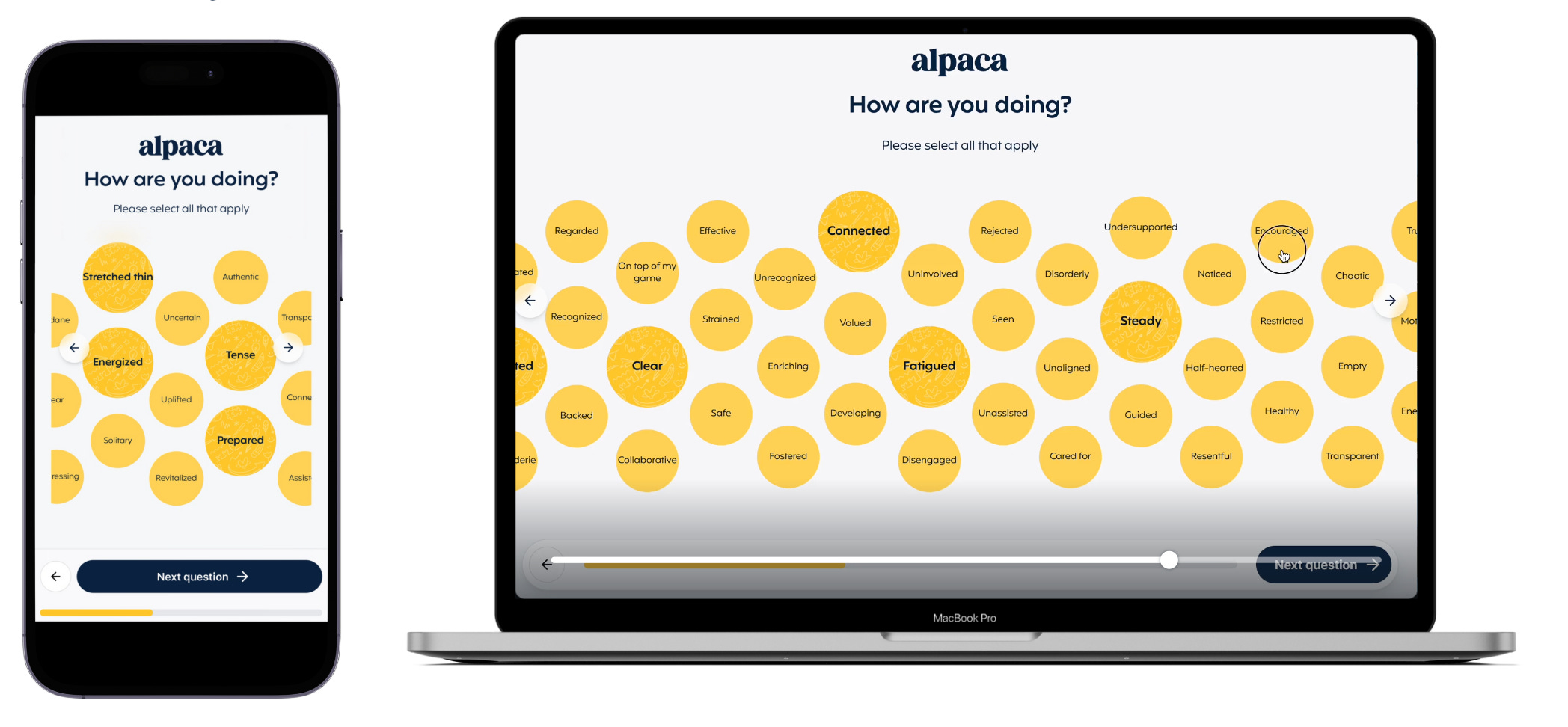
I learned the most from those two roundtable sessions — one with district leaders and one with principals. At each session, I presented Alpaca’s core value proposition with a little context about how we approach our work, and then asked everyone to try out both the survey and the dashboard and offer their candid feedback. I learned so much.
Nothing is more powerful than challenging your own assumptions, and questioning the stuff you’ve taken as “fact.” Here are five things about Alpaca’s products these customers taught me to question.
Let’s question the instructions.
I watched each participant take the survey (by the way, NOT talking and letting the group figure it out themselves was an act of self control). What I observed was both a little bit of initial confusion and then a very thoughtful, focused consideration of the word bubbles presented. People took 1–2 minutes on the How Are You Doing question, and were really thoughtful in their selections. That said, it took a bit before they realized that a) they could choose as many as they wished and b) they could add or remove words later. The instructions in our survey did not come across, at least at first. We have awesome opportunity for clarity here, in some fun and whimsical ways. How might we use hospitality to welcome educators to the survey and make them feel at home?Let’s question the cadence.
One of the first questions was “wow this is fast — how often do people do this?” I mentioned that the typical cadence is monthly, but I also noted that some of our principals put the QR code in teachers’ lounges or staff restroom mirrors, and see more participation. I mentioned that the survey is open all the time, but that we send out a monthly results snapshot. Noting some of the great work we saw last week from Yale’s Center for Emotional Intelligence — one superintendent said:
“It feels like it would be a service to teachers to have a check-in available to them any time they want. This feels good to check in like this, like a grounding in how I feel.”
So why did we have a monthly cadence in the first place? Well, because our packs go out monthly and it used to follow the packs. But I think that’s a constraint that we could set down and potentially deliver more value to our educators. How might we deliver a survey teachers want to take, more often?Let’s question the actions.
As we talked about the dashboard and the action items & resources we offer principals, a conversation emerged around a dynamic that can happen in staff surveys — a principal described it as an “us and them mentality.” What she meant is if surveys replace real conversations, or the improvements are not considered a shared responsibility, leaders feel like they can’t win and teams feel like not enough action is being taken. And obviously, that’s not what we want! School culture is everyone’s job — so… how might we build a product that empowers both leaders AND teams to take action to build strong culture together?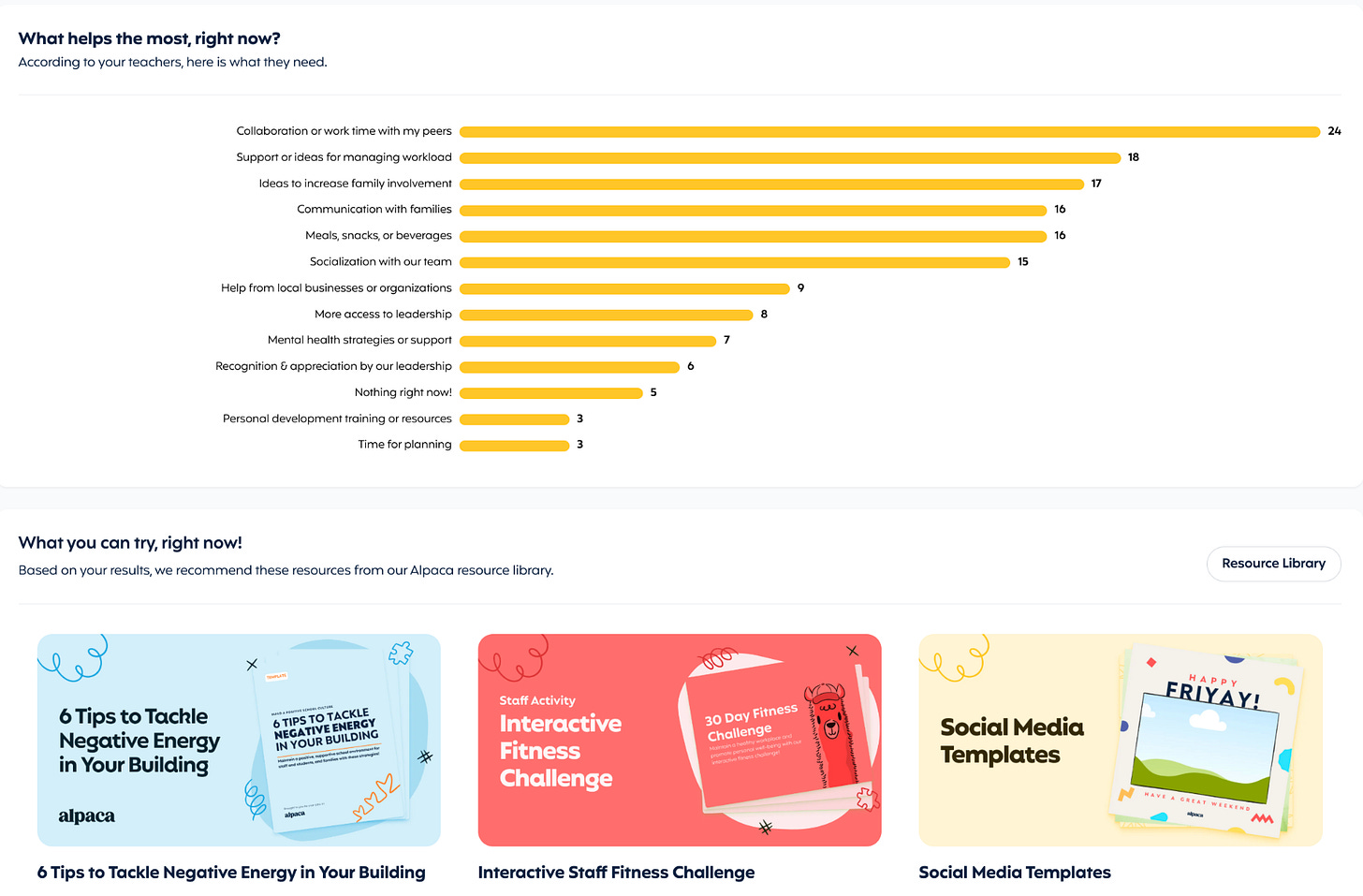
Let’s question the snacks.
Wait, snacks? Oh yes, we talked about snacks! Why? Because I asked: what are the actions you take at your school today to support stronger culture? One of my favorite answers is “we will bust the budget on some snacks!” That got a lot of head nodding, a lot of laughter. But then a principal said:
”We know they LIKE snacks and it can be a morale booster. But it kind of feels like it misses what our teachers really need? Like, are snacks ever the real answer to what our teams need in their school culture?”
This one really got me. Because of course our packs include snacks, always. (That’s not changing!) And they get a lot of positive feedback. But I loved the challenge to think beyond that, and ask ourselves: “How might our product deliver more of what teachers NEED — not just the stuff they’re used to getting?”Let’s question the questions.
We all know that we get asked to customize our survey questions all the time. So I wasn’t surprised when someone asked “can we create custom questions?” But I did love the direction it took — leaders didn’t want a fully custom survey platform — they like our pulse methodology. But they would like the opportunity to occasionally add a single “pulse” question after a specific initiative, decision, or event where they want to know how teams are faring. At a time in education when there are many unknowns and potential changes, we may serve our customers best by asking “How might we give leaders a way to check in with teams during uncertain times?”
What an opportunity!! We get to ask these questions — to ask how might we — with real input from real leaders. It’s an extraordinary experience to do that, and I invite you to try 3 things here:
Try it yourself!
You all know a teacher or a principal — if you don’t, I’m not doing my job! Try this yourself. Take a teacher or principal coffee and ask them to try out our survey. Observe. Listen. Ask questions. Then write up the answers. If you do it and then schedule lunch with me to discuss what you learned, lunch is on me.Ask yourself these questions for your job.
This is not just for Alpaca Pulse — all these questions apply to our packs, our resources, our sales strategy, our messaging — all the work that we do. Feedback is a gift — let’s accept it and use it today.Have an opinion!
Feedback doesn’t mean we have to do it — it means we have to ask ourselves the question and come up with solutions that align with our values and goals. (If we took all feedback, we’d have 1-5 scales and no one wants that!) So as you hear ideas and feedback, practice asking yourself: what’s the Alpaca way to solve this problem?
Feedback is a gift.
Our team is built to listen to it.
And we have an extraordinary opportunity to apply our unique perspective and create awesome solutions for that feedback.
I’ll see you out there this week — let’s ask the big questions, together.
♥ KB