

May 27, 2025
Hello, Alpaca! I hope your Memorial Day was wonderful and that you set your summer off to a great start. As you know, Alpaca kicked off our summer a few weeks ago at The Summer Studio in Austin, TX, where we joined an extraordinary group of designers, engineers, and brilliant minds to deep dive into the Alpaca Pulse experience.

The Summer Studio is unique in its purpose and its execution. Developed by professors at the University of Texas, this workshop brings together 6 up and coming design leaders from companies across the United States to build their leadership experience by taking on one client project, together, for the month of May. This includes one INTENSE week together where they learn and apply the principles of human centered design, all LIVE with a client project and a deadline.
Oh, and the whole thing was held in an old middle school in the middle of Austin, TX.
I didn’t know what to expect for our team, our product, or our company out of the experience — but to have so many perspectives (including former educators) looking at our product and imagining it in a way that serves its user better felt too powerful to pass up. So when Summer Studio asked us to be their client this year, we jumped at it.
Friends, I’ve never seen so many post-it notes. (And that’s something, coming from me!)
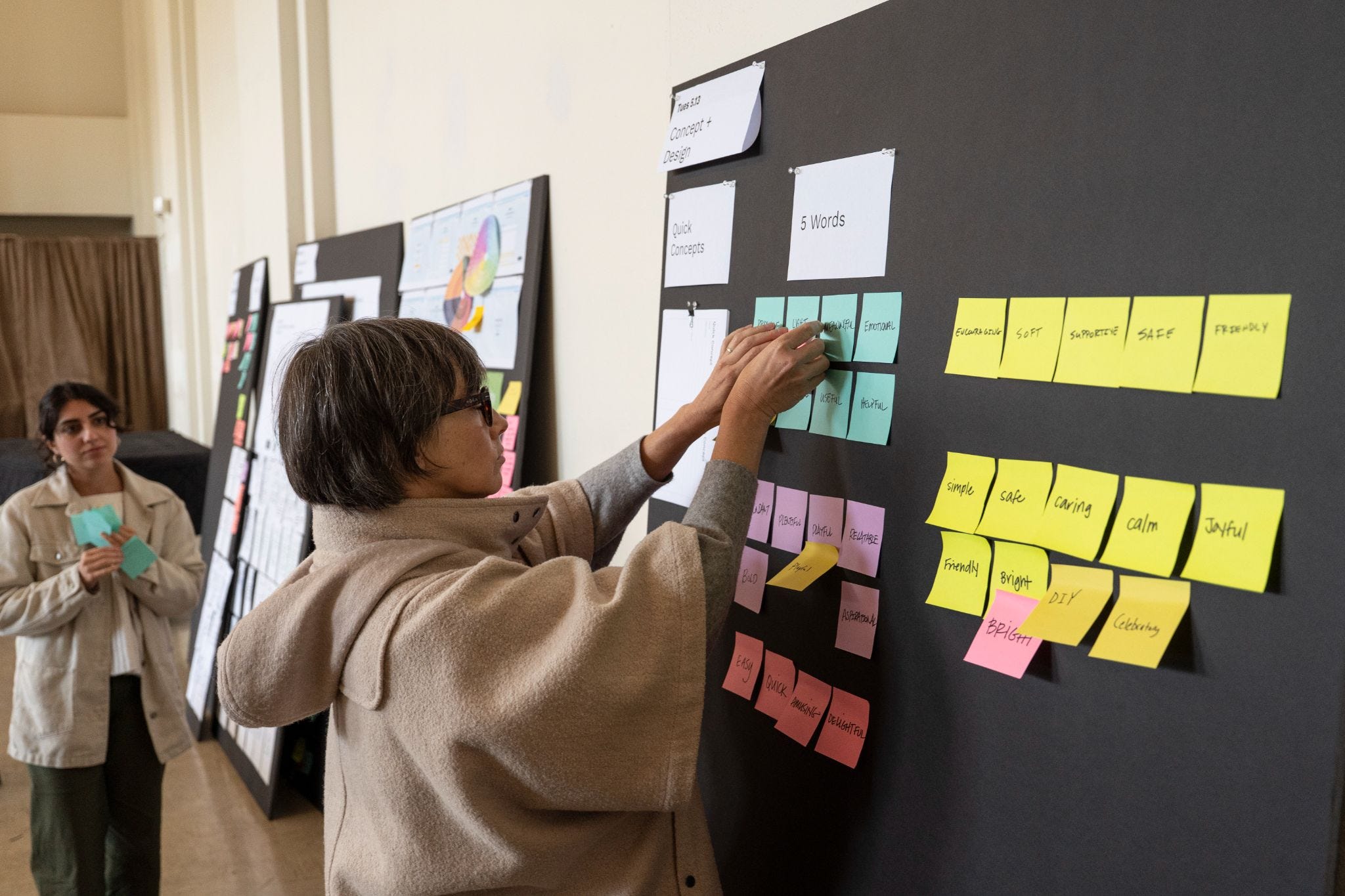
Do you know that cleaning method where, rather than looking at your closet and pulling out 10 things you really should donate or get rid of, you force yourself to dump your entire closet out on the bed and then consider each article of clothing against its purpose and value, keeping only what feels exactly aligned? That’s kind of what we did with Alpaca Pulse.
The Summer Studio team printed and hung up every screen of our current survey product, alongside our company’s goals and values. Posted them on the wall.
Next to that, they took excerpts from our teacher interviews and user tests (we had homework before we arrived) that they felt were relevant.
Next to that, they made a list of our the words they’d use to describe our brand’s value to educators and school leaders.
And next to that…they listed out four big problems with our product that we need to solve in order to build greater trust with educators.
There is nothing like seeing your own product dissected by highly skilled professionals.
We always tell new people at Alpaca that we “work out in the open” — we welcome questions and new ideas, we build collaboratively, we get excited to find better ways to do things. But I don’t think we’ve ever worked as out in the open like we did at Summer Studio.
This team had big questions they weren’t afraid to ask. They wondered “why is it SO important to you that the teacher survey is anonymous?” and “why did you put your own logo at the top of every page of the survey, when the check-in is supposed to be from the school leader?” and “what value does the TEACHER get out of this?”
There was an opportunity to feel defensive.
There was an opportunity to say “it’s impossible, and here’s why.”
There was an opportunity to give the excuse “because we’re different!”
We don’t let every “expert,” or consultant question how we build our product or deliver value to our customers. But the Summer Studio team did something different — they brought the voice of our customer into the room. Then, they put all of the ideas and feedabck up on the wall (literally), and they invited us in the room to put on the “teacher’s view glasses” that they’d built, in order to take a look at what we’d built with new perspective.
What an opportunity.
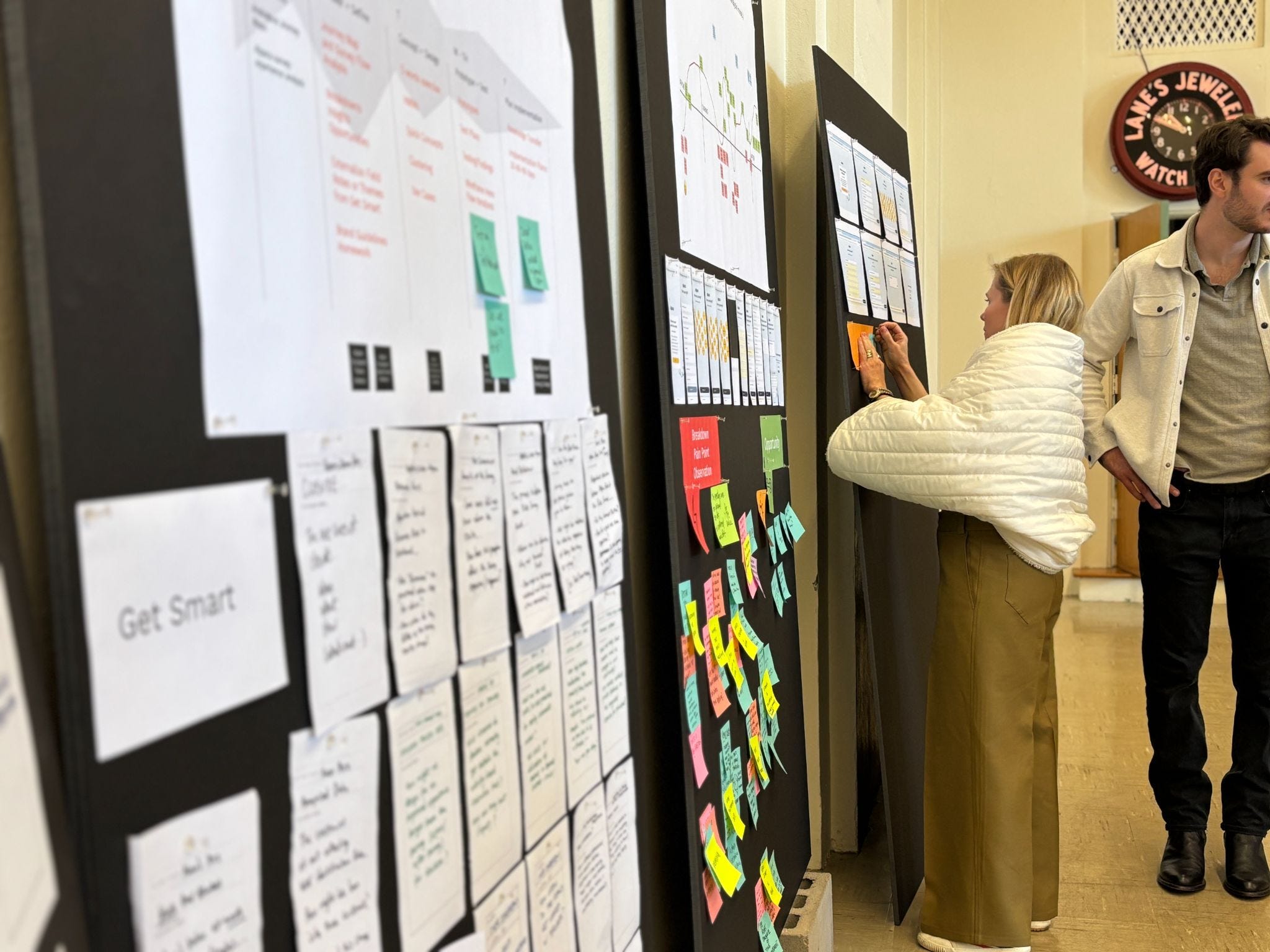
So our team leaned into the questions and “how might we”s. We set down our own assumptions and pride of authorship. We put on the “teacher’s view” glasses that the design team built for us. And then we shut our mouths for a moment and just abided by our #1 value: listen to teachers.
The unexpected bonus? We were so immersed in this mindset, that we brought this questioning method to dinner and back to our AirBnB for conversations late into the night about what our customers needed, what we could build, and what’s possible at Alpaca. I think it deepened our own way of talking about the product internally, and our own skills at bringing customer voice to the table.
What emerged over five short days was a re-imagining of Alpaca’s check-in for educators that builds trust between school leaders and their teams; that delivers value to the educator at the moment of the survey; and that builds a body of knowledge around educator wellbeing that could spark a national conversation.
In the next few days and weeks, you’ll see our new product roadmap and at the end of the summer, you’ll see a new experience for Alpaca Pulse. We cannot wait to share with you. We know exactly what we’re building, or at least, we know the value we want to deliver to our customers with Pulse, and how we think we might accomplish it.


We’ve got a tight timeline for the first release of Alpaca 2.0 — it’s going to be ready for the new school year. But I believe we’ll all come away with a product that makes us say “oh yeah — why didn’t we build it that way in the first place?”
Still, I wouldn’t have built our 1.0 product differently. As you know, Alpaca is a team that works FAST — when we have an idea, we move on it quickly, to get it into the world without too much concern as to whether it’s perfect. The upside there is that we get to test our ideas with real customers quickly. The downside is that we don’t often go back to say “hey, why did we make that decision?” or “what value is that providing to educators?”
The Summer Studio gave us that opportunity — to get aligned with our customer and with our own product values, to listen carefully, and then to build a solution that we’re proud of. That’s the value of working out loud, in the open, with your customer in the room.
Here’s the challenge for each of us this week. Think about one element of YOUR work (our product? our onboarding? our event presence? our sales demo?) and ask yourself three questions:
Am I holding on to anything in this work just “because that’s how we’ve done it?”
Have I listened to teachers enough about this? (You know, we’ve got 24 of them joining us in 2 weeks!)
How might we improve the value to educators in this part of our work?
Try it with post-it notes! Give it twenty minutes of your time, to dissect a teeny part of what you do, ask yourself some hard questions, and consider the teacher perspective. Then make a few “how might we” statements and put them close to your work space. See what happens, and report back!
Off we go — it’s time to build Pulse 2.0, with the educators at the center of the experience.
Onward!
KB
What a week! And what an inspiring message, Karen. I'm excited to hear about the testing and see you launch Pulse 2.0!