

November 11, 2024
When I was first formulating the idea for Alpaca, I had a lot of ideas swirling around in my head. How to create something that supported teachers, but was easy for schools, and was simple to be a part of, and actually made a difference, but was also a viable, high growth business. And what about the data? And would it be enough to move the needle? It was all swirling in my head, and I didn’t know if I had something real, or just a crazy idea.
So, a few weeks later, I found myself in a hotel room in Rochester, MN. I was accompanying a friend and his family to the Mayo Clinic there for some tests, and my job was to be on call for meals, companionship, errands, or whatever was needed. That left me a lot of time in a hotel room without much to do. So I set myself up a little office, and challenged myself to write a business plan for this thing in 1 day. And if I couldn’t get the business plan right, I’d let the project go.
Before I started, I wrote a single word on a piece of paper and taped it to the wall in front of my desk. It said “UNSAYNOABLE.”
What I knew I wanted was something that was a “no brainer” — something no one could say “no” to. In order for teachers to not say “no” — it would have to cost the teachers zero (money OR time!), it would have to be actually helpful and useful stuff, and it would have to support teachers equally, not just the “favorite” teachers in the building. For principals to not say “no” — it had to be easy, affordable, and not “one more thing” on a principal’s very lengthy list. And because the revenue model then was our parent pay platform, parents couldn’t say “no” either — so it had to be simple to participate and support your school, their money had to stay with their school’s educators, and it had to feel truly supportive and rewarding. Investors couldn’t say “no” — so it had to have a solid revenue model and Go To Market strategy — we weren’t building a charity! And employees couldn’t say “no” — each person’s work had to make a difference, be led by strong core values, and be part of a big success story.
With my business plan in place, I ran it against the “unsaynoable” test, and found that I had a defensible product and revenue model in mind. I hadn’t executed it, mind you, but I had a pretty solid plan. So I went for it.
I have been thinking about that a lot right now, as I’ve been building a new financial model and some additional support for potential investors about what we’re building, who we’re building it for, and how we’re going to win in the market. The product has changed considerably, as you know! And so I’ve been asking myself the same question as I did in that Rochester hotel room lately — how do we make Alpaca “unsaynoable” NOW?
I think it comes down to a few questions. In no particular order:
1. Teacher Participation: How do we create surveys that teachers don’t think twice about participating in? Because they’re fun, because they feel valuable, because they feel like they’re giving the teacher a voice in their building.
2. Principal Use: How do we create a dashboard and reporting experience that principals want to log into every day/week? Every day would be best (we’re not there yet) but the ideal is this: we want Alpaca to feel indispensable to principals in how they do their jobs. That means it can’t make them feel like they’re doing something wrong if the words used to describe work among their staff are negative ones. (That’s a hard problem to solve!) And it means that they can’t look at the data and say “hmm, that’s interesting.” Because “interesting” isn’t “useful” — and we’re going for useful.
3. District Trust: How do we create a system and set of products that districts believe can and will move the needle for raising teacher retention and lowering teacher absenteeism in their districts? For districts, that trust comes down to one thing: does it really, really WORK? For other districts that we can hear from, for districts with the same demographics or same challenges as ours, for district leaders we know and trust?
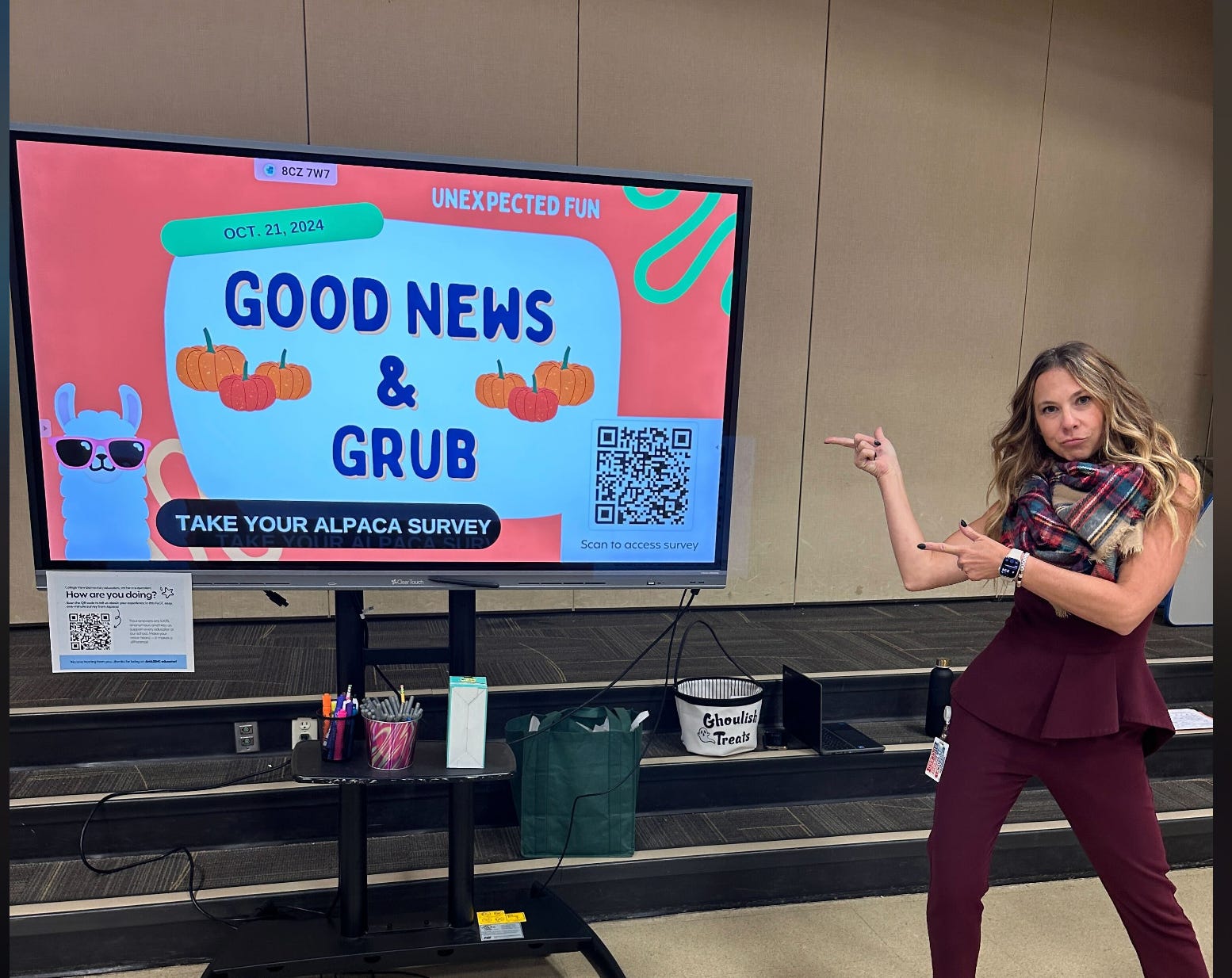
When we’re thinking about what we’re building right now — be it marketing materials, a sales proposal, a new product feature, or a resource, I challenge you to line your idea up against the “unsaynoable” test and see if you feel like the thing your making increases teacher participation, builds principal usefulness, or ensures district trust. If it doesn’t, take it back to the drawing board for another pass — or ask one of us to help you think it through with that lens!
Products supporting education today can’t be “nice to haves” — the stakes are too high and the budgets are too competitive. As Alpaca builds out our product roadmap and future, we have to keep these “unsaynoables” at the forefront. That’s how we win, and it’s how teachers win.
Let’s go!
KB