

March 24, 2025
Happy Monday, Alpaca! It’s the last week of the month and the quarter — so you know we’ll be working hard to hit our sales and marketing goals, pack and ship thousands of our beautiful April pack, and continue to support our customers.
This time of year, we start to shift our sights to about upcoming summer breaks and end of year celebrations, because most of our educators and school leaders come into the last couple months of the school year.
Most, but not all. Because do you know whose school year doesn’t come to an end in May or June? Early childhood educators.


As we grow as a company, we’re learning that “educator” means so many different things depending on your location, age group, rural or urban setting, and so many other factors.
Each opportunity Alpaca has to expand our services to new types of schools and teachers is a chance to broaden our understanding of the different types of educator.
It’s why I am SO excited about our new partnership with the Nebraska Early Childhood Collaborative and Best Care EAP to support early childhood educators across our state with a new type of wellbeing program.
Recently, I spent time with Brandee Lengel, VP of Quality Child Care Partnerships and her team — our new partners at Nebraska Early Childhood Collaborative; and with Morgan Grot, COO of CRCC, an early childhood provider in Omaha, NE (and Alpaca customer), to learn about how to support early childhood educators the best. It turns out, there was a LOT I didn’t know about the profession!
My question for each of them was, “What would early childhood educators want people to know about their experience at work?”
Here are just a few of the things I learned from the conversation:
No definitive start and end to the school year — it’s year round, always. That means that the back-to-school gearing up or the end-of-year celebrations aren’t always as relevant or can make EC educators feel left out.
At home care providers are both educators and business owners, so their work is not only to educate children but also to handle the appropriate compliance associated with running a business.
EC educators are working with a population with fewer communication, coping, and social skills than school age children. That can feel like chaos!
Requirements for being an EC educator are much more varied than in K-12 education, so as an EC educator, your peers may have very different levels of education and experience.
Diapers. Need I say more?
Under the law, kids under the age of 5 are considered a “vulnerable population.” This creates a far more regulated environment, which requires greater knowledge of and attention to things like ratios of kids to teachers in the classroom, reporting of incidents, and so forth.
Little kids don’t know how to wash their hands, wipe their noses, or cover their coughs, so early childhood educators have to build iron-clad immune systems.
EC educators often have to find their own professional development opportunities, which are required for the profession, but less readily available that in a K-12 environment.
EC work is more physically demanding, as you are often picking up kids, carrying them around, or sitting criss cross applesauce on the floor.
At-home EC providers often have no co-workers or peers to share experiences with. That can feel really lonely.
Schedules and calendars! The school day is often 6 am - 6 pm so EC educators often work in shifts, and there are typically fewer “specials” or rotations, so kids are in the room all day.
But the most important thing that she thinks EC edcuators would like us to know about this profession is this:
“That early childhood education is a REALLY important job. A lot of people think that early childhood education is about “day care” — making sure kids stay safe and entertained while their parents are working. But the data is overwhelmingly clear that quality early childhood education has an enormous impact on the future health, learning outcomes, and economic outcomes for children worldwide.”
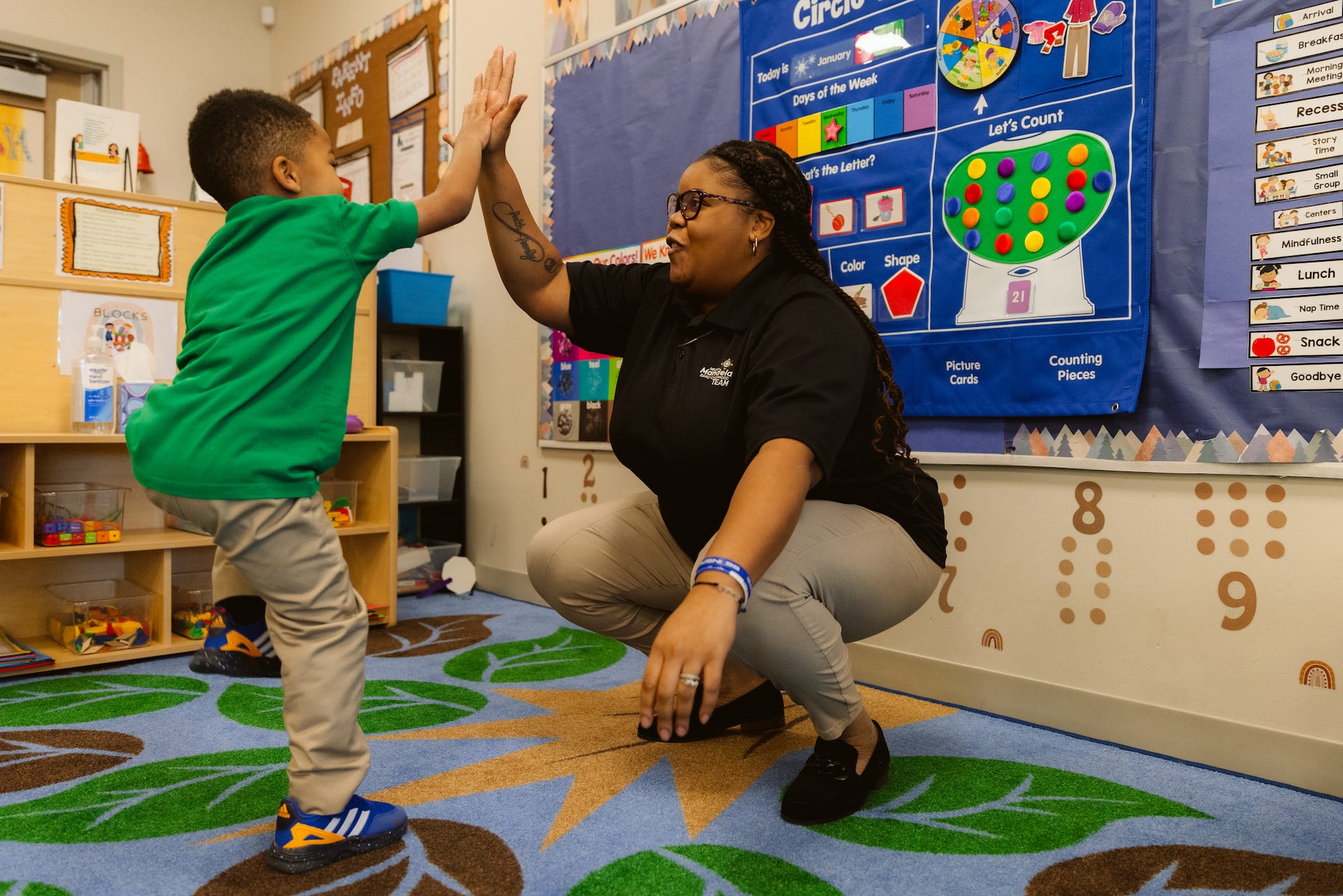
This new partnership is the beginning of Alpaca’s opportunity to build a deep understanding of the needs of early childhood educators, while developing tools and resources for leaders in this space to be able to listen to their teams’ needs in a new way, in order to support them fully.
Let’s keep learning, Alpaca — the EC education profession is critical to building strong future learners and successful schools and communities.
Onward!
KB